
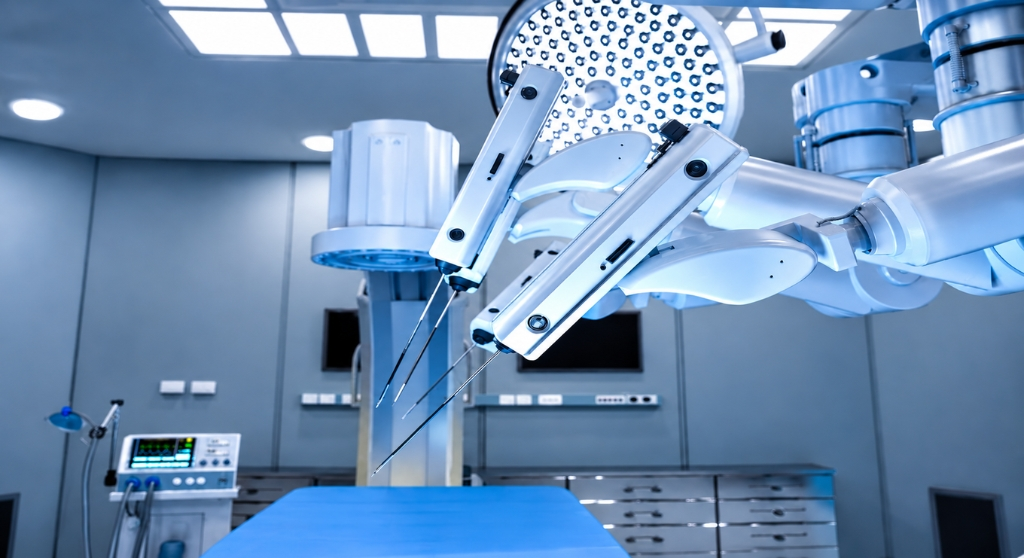
RIM for medical devices can help bridge this gap. Medical-device programmes often need large, complex parts in polyurethane grades that mimic end-use plastics like ABS or PP, before demand justifies a hardened production tool. Diagnostic equipment, imaging systems, surgical systems, and other devices may require these parts in low monthly quantities while the design, market, or regulatory pathway is still being validated.
Reaction injection moulding for medical devices can help bridge this gap. RIM uses liquid polyurethane components that react and cure inside a mould, making it suitable for selected large, complex, and low-volume parts. It can provide functional and visual representation without committing immediately to a high-cost steel production tool.
Marcopolo supports RIM, vacuum casting, soft tooling, injection moulding, assembly, finishing, and low-volume medical-device manufacturing. Its medical-device capability includes RIM for large enclosures and machinery housings, as well as material and process options for different product stages.
Need a large medical-device enclosure?
What is RIM for medical devices?
Reaction injection moulding is a low-pressure process. Two liquid polyurethane components, commonly a polyol and an isocyanate, are metered, mixed, and injected into a mould. They react chemically inside the mould and cure into a rigid or flexible polyurethane part.
This differs from conventional injection moulding, where pellets are melted and injected at higher pressure. The lower-pressure RIM process can make large moulds, complex geometry, and controlled low-volume production more practical for suitable applications.
RIM tooling is produced using silicone, aluminium, or ABS, depending on the part, finish, quantity, and expected tool life. Tooling must still be designed around filling, venting, sealing, curing, demoulding, and inspection.
Why RIM matters for medical devices
A medical-device enclosure is not only a cosmetic cover. It may need to protect internal systems, support assembly, maintain gap and flush, withstand cleaning, accommodate displays and controls, and meet the specified appearance and functional requirements.RIM can be useful when the programme needs:
- Large parts in a single piece.
- Complex geometry and varying wall sections.
- Functional prototypes or validation builds.
- Low or uncertain monthly demand.
- Production-like appearance before mass production.
- Flexible tooling while the design is still evolving.
We support RIM manufacturing for parts up to 2 metres in a single piece. For medical devices, we manufacture large enclosures and equipment housings, with typical production volumes of approximately 20–30 parts per month. These figures represent our capabilities, not fixed project guarantees. Final feasibility depends on part geometry, material, surface finish, tooling requirements, and production quantity.
Where RIM is valuable in medical devices
RIM can be evaluated for selected non-patient-contact and equipment-housing applications, including:
- Diagnostic-equipment housings and covers.
- Imaging-equipment panels and large enclosures.
- Drug-delivery equipment housings.
- Surgical-robot covers and equipment sub-assemblies.
- Medical machinery panels and protective covers.
- Large functional prototypes for design validation.
RIM is not automatically suitable for every medical component. Parts that contact tissue, blood, medication, or the patient require a separate material, risk, biocompatibility, cleaning, sterilisation, and validation assessment.
RIM material selection and medical requirements
The material must be selected for the part’s actual use. RIM polyurethane formulations may differ in hardness, density, stiffness, impact performance, chemical resistance, colour, surface finish, and flame behaviour.
We offer a range of polyurethane (PU) grades that can mimic the properties of selected engineering plastics, along with elastomeric PU options for flexible components and flame-retardant PU grades for functional testing and applications with specific regulatory requirements.
A polyurethane grade that mimics ABS, PP, or another engineering plastic is not automatically chemically or mechanically identical to that thermoplastic. The selected formulation must be evaluated against the device’s operating temperature, cleaning agents, disinfectants, mechanical loads, surface requirements, and intended use.
For medical-device development, the material record should include the exact manufacturer, grade, formulation information where required, processing conditions, additives, colourants, sterilisation compatibility, and relevant test evidence. FDA guidance on ISO 10993-1 emphasises considering the material, final finished device, processing, impurities, sterilisation, and possible leachables in a biocompatibility evaluation.
Need to verify material suitability?
What RIM cannot replace
RIM is functionally representative of engineering thermoplastics, not identical to them. A polyurethane grade approaching a material’s mechanical behaviour still needs confirming for the exact grade before it’s specified. RIM also has a practical volume ceiling. Once a programme needs more than RIM’s monthly output can support in the required timeframe, soft tooling or production tooling becomes the better route.
When the final design is locked and volumes increase, soft tooling or production injection moulding may become more appropriate. Marcopolo supports RIM, soft tooling, injection moulding, machining, and other processes so the manufacturing route can change as the device matures.
When is RIM the right call?
RIM is worth evaluating when the part is large, complex, and needed in low or uncertain quantities. It is particularly useful when a team needs functional or visual parts while the design is still changing or while market demand is being established.
| Requirement | Why RIM may fit |
| Large enclosure | Supports large single-piece polyurethane parts |
| Low monthly quantity | Avoids immediate high-volume tooling commitment |
| Design still changing | Flexible tooling can support iterations |
| Functional validation | Provides production-like form and performance for selected tests |
| Cosmetic requirement | Supports moulded surfaces, painting, and finishing |
| Assembly-ready output | Supports child-part assembly; insert integration depends on part and tooling design |
The right process should be decided after reviewing CAD, quantity, material, finish, operating conditions, cleaning, and validation requirements.
Quality and documentation
Low-volume production still needs controlled quality. Define the drawings, revision level, critical dimensions, material grade, inspection plan, acceptance criteria, and change-control process before the first production batch.
Depending on the device and intended market, documentation may include material certificates, batch records, inspection reports, first-article approval, cleaning records, process parameters, and validation evidence.
The exact requirements depend on the device classification, patient contact, intended use, and applicable quality or regulatory system. RIM parts should not be described as “medical compliant” solely because they are used in a medical machine; compliance depends on the complete application and evidence.
Why Marcopolo for RIM medical-device parts?
At Marcopolo, we support medical-device teams from design through low-volume production. Our capabilities include RIM for large or complex components, biocompatible and high-performance plastics for suitable applications, soft tooling, injection moulding, assembly, and ultrasonic cleaning and welding.
Our RIM and vacuum-casting facility provides DFM support, large-part RIM up to 2 metres, a range of polyurethane materials, painting, assembly, and stage-wise quality control.
Ready to evaluate RIM for your device?
Conclusion
Reaction injection moulding for medical devices is most valuable when a medical-equipment programme needs large, complex, functional parts at low or uncertain volumes. It can support equipment housings, diagnostic covers, imaging panels, surgical-system covers, and other selected non-patient-contact components before full-scale tooling is justified.
RIM should always be evaluated with the material, cleaning, sterilisation, biocompatibility, quality, and validation requirements in view. The right manufacturing partner can connect DFM, mould development, material selection, finishing, assembly, inspection, and low-volume production in one controlled workflow.
Need a large, functionally representative part?
FAQs
What is reaction injection moulding for medical devices?
It is a low-pressure polyurethane moulding process used for selected medical-equipment housings, covers, panels, and other large or complex parts at low or medium volumes.
Is RIM suitable for patient-contact components?
Not automatically. Patient-contact or fluid-contact components need material, biocompatibility, cleaning, sterilisation, and regulatory assessment for the complete finished device.
What medical-device parts can be made with RIM?
RIM may be evaluated for diagnostic-equipment housings, imaging covers, drug-delivery housings, surgical-equipment covers, medical machinery panels, and large functional prototypes.
Why is RIM useful for low-volume medical devices?
It can provide large, complex, functional parts without immediately committing to a high-cost hardened production tool, which is useful when demand or design is still evolving.
What materials are used in RIM?
Polyurethane systems are commonly used. Formulations may be rigid, flexible, elastomeric, or flame-retardant, depending on the application and required validation.
Can RIM parts be painted and assembled?
Yes. RIM parts can be trimmed, painted and assembled, as part of the finishing process.