
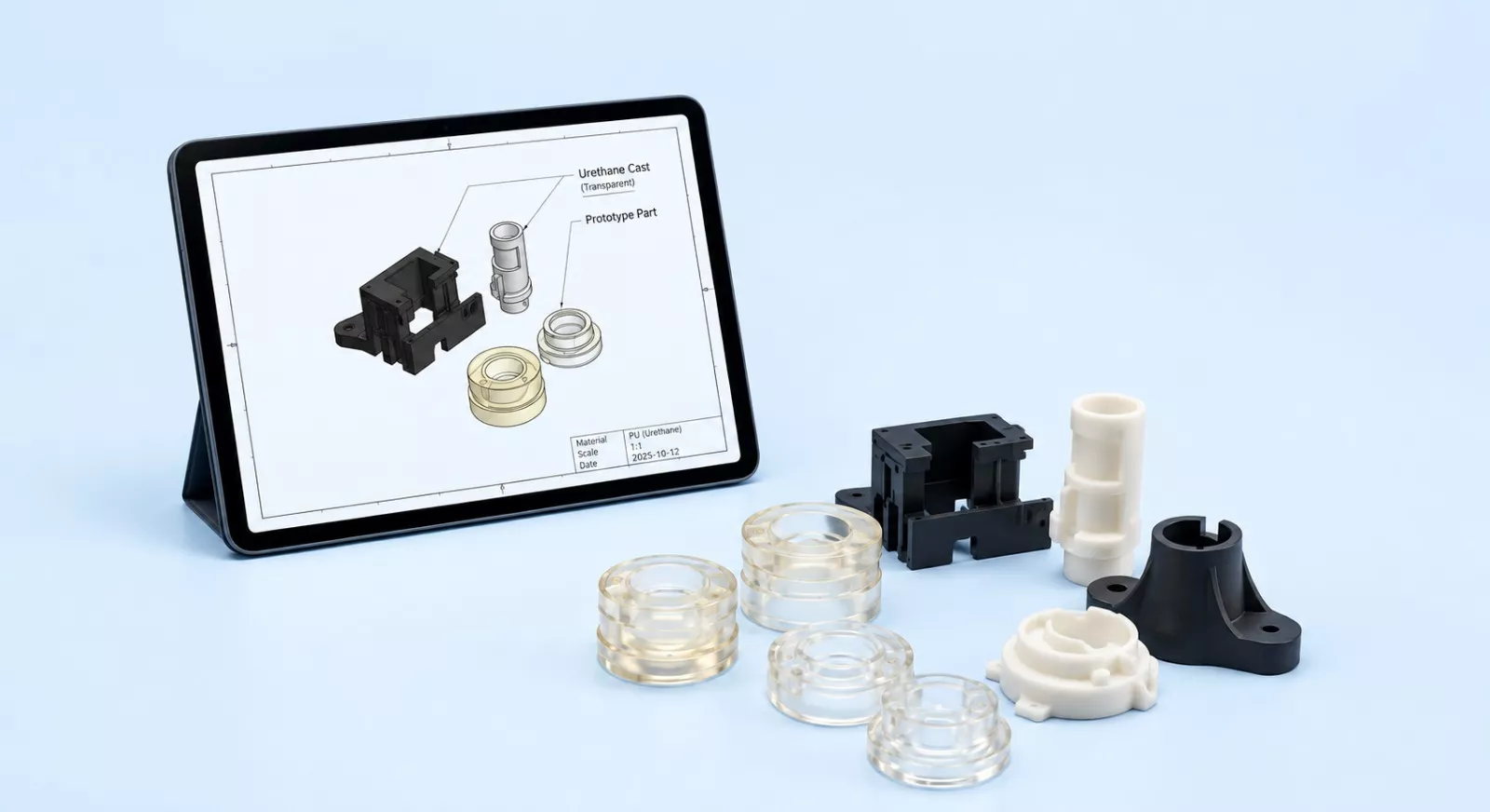
High mix low volume production is a manufacturing approach that allows EMS companies to produce a wide variety of electronic components in smaller batches. It helps electronics manufacturers manage changing customer requirements, improve production flexibility and reduce the need for large-scale manufacturing commitments.
For Indian EMS companies taking on more global programmes, this kind of work is growing fast. Running it on a line built for volume is slow and expensive, and committing to production tooling before demand is known is a risk. Small batch production gives EMS companies a way to supply exactly what each programme needs now, and to add to it as demand becomes clear.
Need plastic parts in smaller batches?
What Is High Mix Low Volume Production?
High-mix, low-volume (HMLV) production is the manufacture of many different parts, each in small quantities. For an EMS company, it typically covers NPI and pilot builds, regional or customer-specific variants, engineering change runs, and service and end-of-life spares.
Batch size and production volume are related but not the same. Batch size is the quantity made in a single run. Production volume is the total made over a longer period. A part with steady but modest demand may be supplied through several small batches across a year, without ever justifying a mass production setup.
Why Outsource Small Batches?
The main reason is flexibility. Quantities can follow what each programme needs now, with further runs as requirements become clearer, rather than following a long-term forecast.
Keep Volume Lines On Volume Work
Every short run on a volume line means a mould change, setup, first-off checks and scrap before good parts flow. Moving small batches to a low volume partner keeps presses and people on the high-volume work they were planned for.
Match Production To Demand
A new programme rarely arrives with a reliable forecast. Small batches limit how much is committed upfront while leaving a clear route to larger quantities once orders confirm the demand.
Make Changes Between Runs
Feedback from pilot builds, OEM approvals and field trials often leads to design changes. With smaller batches, those changes go into the next run instead of into stock that has already been made.
Supply Variants And Spares
Some parts never reach mass production volumes: product variants, replacement parts, and parts for products nearing end of life. For these, small batch production is the long-term supply model, not a step towards something else.
Managing variants, pilots, or service parts?
Choosing A Process For Small Batch Production
Small batches can be made with the same processes used for prototyping and production. The right choice depends on quantity, how stable the design is, and whether the part must be in the production material.
| Process | Recommended for | Considerations |
| 3D printing (SLS, MJF) | Low quantities, complex geometries and designs still changing | No tooling, so designs can change between runs. Parts are in nylon PA12, not the production grade |
| Vacuum casting and RIM | Small sets of functional or display parts, and large enclosures | Low cost silicone or RIM tooling. Polyurethane mimics engineering plastics but is not identical to them |
| CNC machining | Precision plastic parts in small numbers | No dedicated tooling and real engineering plastics, with cost rising quickly with quantity |
| Soft tooling and injection moulding | Repeat batches in the production-intent material | Tooling cost upfront, but repeatable moulded parts across many batches |
3D Printing
SLS and MJF build tough nylon PA12 parts in 3 to 5 days without any tooling. They suit low quantities, parts with complex geometry and programmes where the design may still change from one run to the next.
Vacuum Casting And RIM
Vacuum casting produces polyurethane parts from silicone moulds, each typically yielding 20 to 25 parts, in rigid, rubber-like and clear grades. RIM extends this to large enclosures up to 2 metres, including flame retardant grades. Cast parts are functionally representative of engineering plastics, which makes them useful for pilot builds and samples where the production grade is not yet required.
CNC Machining
Machining cuts parts from solid engineering plastics such as PC, POM or PEEK, without a mould. It suits precision parts in small numbers, though cost per part stays high as quantities grow.
Soft Tooling And Injection Moulding
For parts that need to be moulded in the production-intent material, soft tooling makes moulding practical at low volumes. A soft tool in aluminium, EN31 or unhardened P20 steel typically costs about half as much as a hardened production tool, is ready in 2 to 6 weeks, and has a tool life of up to 50,000 shots, enough to supply repeat batches across the early life of a programme.
Where Small Batches Fit In The Product Life Cycle
Small batch production plays a different role at each stage of an OEM programme.
During development, small batches provide parts for NPI builds, pilot runs and OEM approval.
At launch, they supply the first production orders without committing to volumes the market has not yet confirmed.
As a bridge, they keep parts available while production tooling is being made, or when demand rises unexpectedly.
Later in the life cycle, they supply spares and end-of-life parts, when holding large inventory no longer makes sense.
Scaling Up From Small Batches
As volumes grow, the process that suited the first batches may no longer be the most cost-effective. Production tooling in hardened steel, ready in 5 to 8 weeks, becomes easier to justify once demand is confirmed, and the decision can be made on real orders rather than a forecast. How often parts are needed and the cost of holding inventory both shape whether to increase batch sizes or move to a different process.
How Marcopolo Supports EMS Companies
Marcopolo is a development and manufacturing partner for the batches volume lines are not built for. Design and DFM, prototyping, soft and production tooling, injection moulding and assembly run through one partner, with batch sizes from as few as 20 units, under an ISO 9001 certified quality system. Concept to production, under one roof.
Unsure which process fits your programme?
FAQs
What is high mix low volume manufacturing for EMS?
It is a production approach for varied parts or configurations supplied in relatively small quantities, including NPI builds, variants, pilots, and spares.
How does batch size differ from production volume?
Batch size is the quantity made in one run; production volume is the total over a defined period. Several small batches can support ongoing demand.
Why outsource small plastic-part batches?
Outsourcing can provide process flexibility and capacity while keeping internal lines focused on their planned work. Benefits depend on total cost, quality, and supplier reliability.
Which processes suit small-batch electronics components?
Options include 3D printing, vacuum casting, RIM, CNC machining, and injection moulding. Material, geometry, testing needs, and repeat demand determine the right route.
Can small batches use the specified production resin?
Yes, where the moulding process and tooling support it. Printed or cast substitutes must not be assumed to match the exact production grade.
When should EMS companies move to production tooling?
When stable design, confirmed demand, quality requirements, and total-cost analysis justify the investment. Qualify the new tool or process before switching supply.