
Vacuum Casting for Pre-Series Production is an efficient way for manufacturers to test functional prototypes before moving to mass production. In the manufacturing and prototyping industry, transitioning from design to production can be challenging and time-consuming. One of the most efficient ways to test prototypes before mass production is through vacuum casting. This technique allows companies to create high-quality functional prototypes that closely resemble the final product, making it ideal for pre-series production and testing. In this blog, we will explore why vacuum casting is an optimal choice for businesses when compared to other methods like 3D printing and CNC machining.
What is Vacuum Casting?
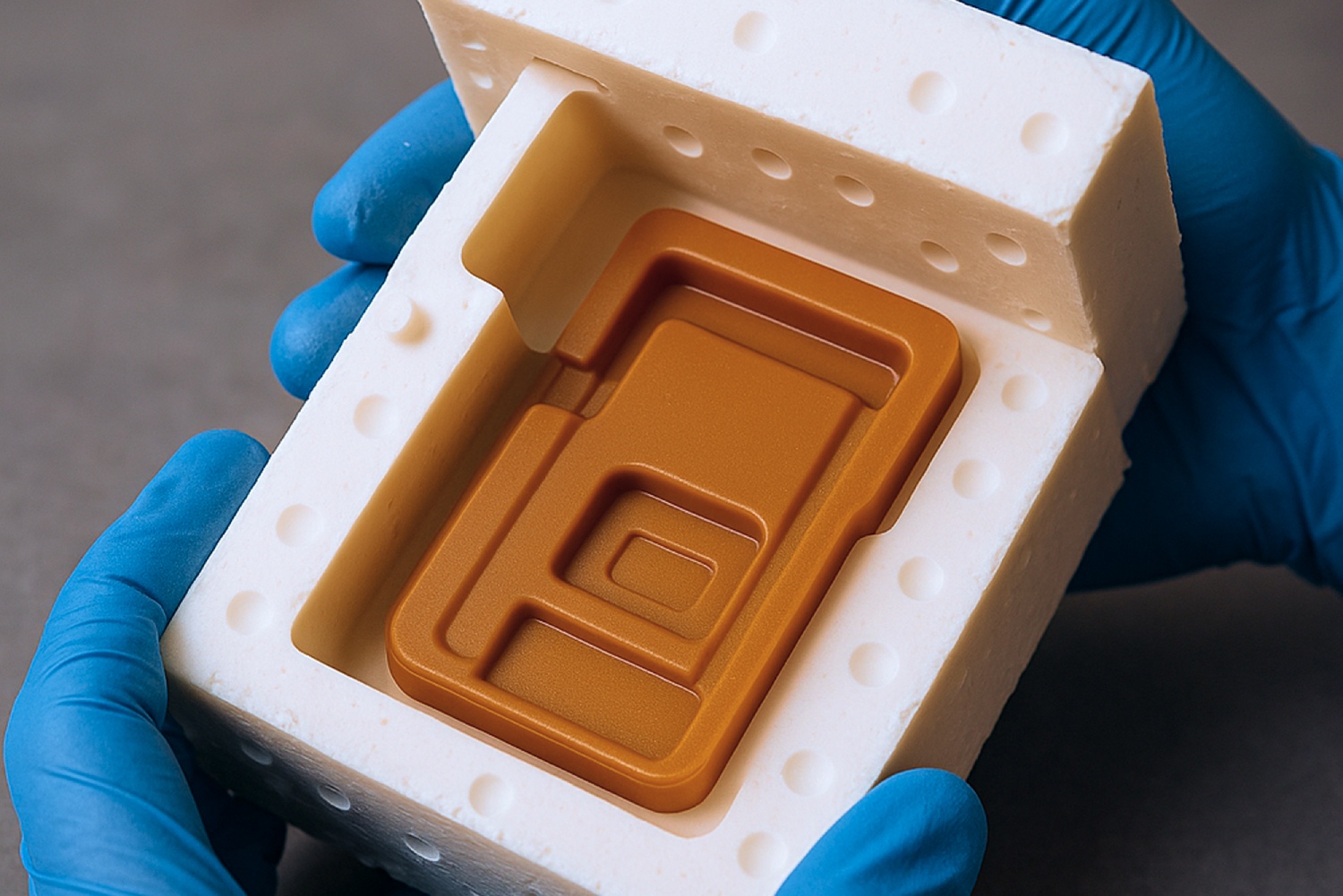
Vacuum casting is a manufacturing technique that uses silicone molds to create plastic parts. First, a master model (often created using 3D printing or CNC machining) is placed in a vacuum chamber, where the silicone is poured around it. After curing, the silicone mold is used to cast the part in polyurethane or another material. This process is typically used for creating prototypes, functional parts, and small production runs, especially when cost-effectiveness and quick turnarounds are crucial.
Need accurate, short-run prototypes?
3D Printing vs CNC Machining: A Comparison
Before diving into the advantages of vacuum casting, it’s important to understand the differences between 3D printing and CNC machining—two other methods used for prototyping.
- 3D Printing is an additive manufacturing process that creates objects layer by layer. It is ideal for rapid prototyping and creating complex geometries. However, 3D printed parts can lack the strength and material variety needed for functional prototypes.
- CNC Machining is a subtractive manufacturing process that starts with a solid block of material and uses machines to cut away the excess material to create the final part. While CNC machining is great for precision and complex designs, it is generally slower and more expensive for small-volume production compared to other methods.
Why Vacuum Casting is Ideal for Pre-Series Production & Testing
When it comes to pre-series production and testing, vacuum casting offers several significant benefits that make it an excellent choice over both 3D printing and CNC machining.
1. Cost-Effective and Efficient for Low-Volume Production
One of the most significant advantages of vacuum casting is its cost-effectiveness for low-volume production. Unlike CNC machining, which requires expensive tooling and material costs for each part, vacuum casting can create multiple parts from a single mold, making it a more affordable choice for small-scale production and testing.
2. Material Versatility
Vacuum casting allows you to use a wide variety of materials, including silicone, polyurethane, and even metals. This flexibility is essential for industries like automotive and medical devices, where functional testing is critical, and parts need to simulate the final product’s materials and performance characteristics.
3. Faster Turnaround Time
While 3D printing is known for rapid prototyping, vacuum casting can still offer a faster turnaround for producing functional parts in shorter production runs. The molds used in vacuum casting are reusable, which means that businesses can quickly produce multiple parts in a matter of days, rather than weeks, as is often the case with CNC machining.
4. High-Quality and Functional Prototypes
Unlike 3D printing for prototyping, where parts may not always have the same strength or finish as the final product, vacuum casting provides high-quality parts that are much closer in appearance and performance to the final product. This makes it ideal for functional testing and iterating designs before committing to full-scale production.
Additive Manufacturing vs Subtractive Manufacturing
In the ongoing debate of additive manufacturing vs subtractive manufacturing, vacuum casting falls somewhere in between. It combines elements of both techniques, offering the detail and customization of additive manufacturing (like 3D printing) but with the strength and durability closer to subtractive manufacturing (like CNC machining). This hybrid nature allows vacuum casting to produce functional parts that are not only accurate but also ready for real-world testing.
Benefits of Vacuum Casting for Pre-Series Production
- Speed: Vacuum casting can create high-quality prototypes much faster than traditional CNC machining, allowing companies to accelerate their development cycle.
- Cost: The low-cost nature of vacuum casting for small batches makes it an ideal choice for pre-series production and testing.
- Quality: The ability to replicate intricate details and use real-world materials makes vacuum casting the ideal solution for functional testing of prototypes.
Conclusion
Vacuum Casting for Pre-Series Production provides a cost-effective and efficient solution for businesses looking to prototype, test, and produce low-volume parts before moving to full-scale production.
With its ability to deliver high-quality parts quickly and affordably, it is an ideal choice for pre-series production and testing in industries like automotive, medical, and electronics.
Ready to turn your prototype into production?
FAQs
What are the main advantages of vacuum casting for prototypes?
Vacuum casting offers faster production times, cost-effective small-batch manufacturing, and the ability to use materials that simulate the final product, making it ideal for functional prototypes.
How does vacuum casting differ from 3D printing and CNC machining?
While 3D printing is best for creating complex geometries and rapid prototyping, vacuum casting provides higher material variety and better quality for functional parts. CNC machining is precise but typically more costly for low-volume production compared to vacuum casting.
Can vacuum casting be used for low-volume production?
Yes, vacuum casting is an excellent option for low-volume production, especially when the required quantity is too low for traditional injection molding to be cost-effective.
What industries can benefit from vacuum casting?
Automotive, medical, aerospace, and consumer electronics industries can all benefit from vacuum casting, especially for creating functional prototypes and small production runs.