
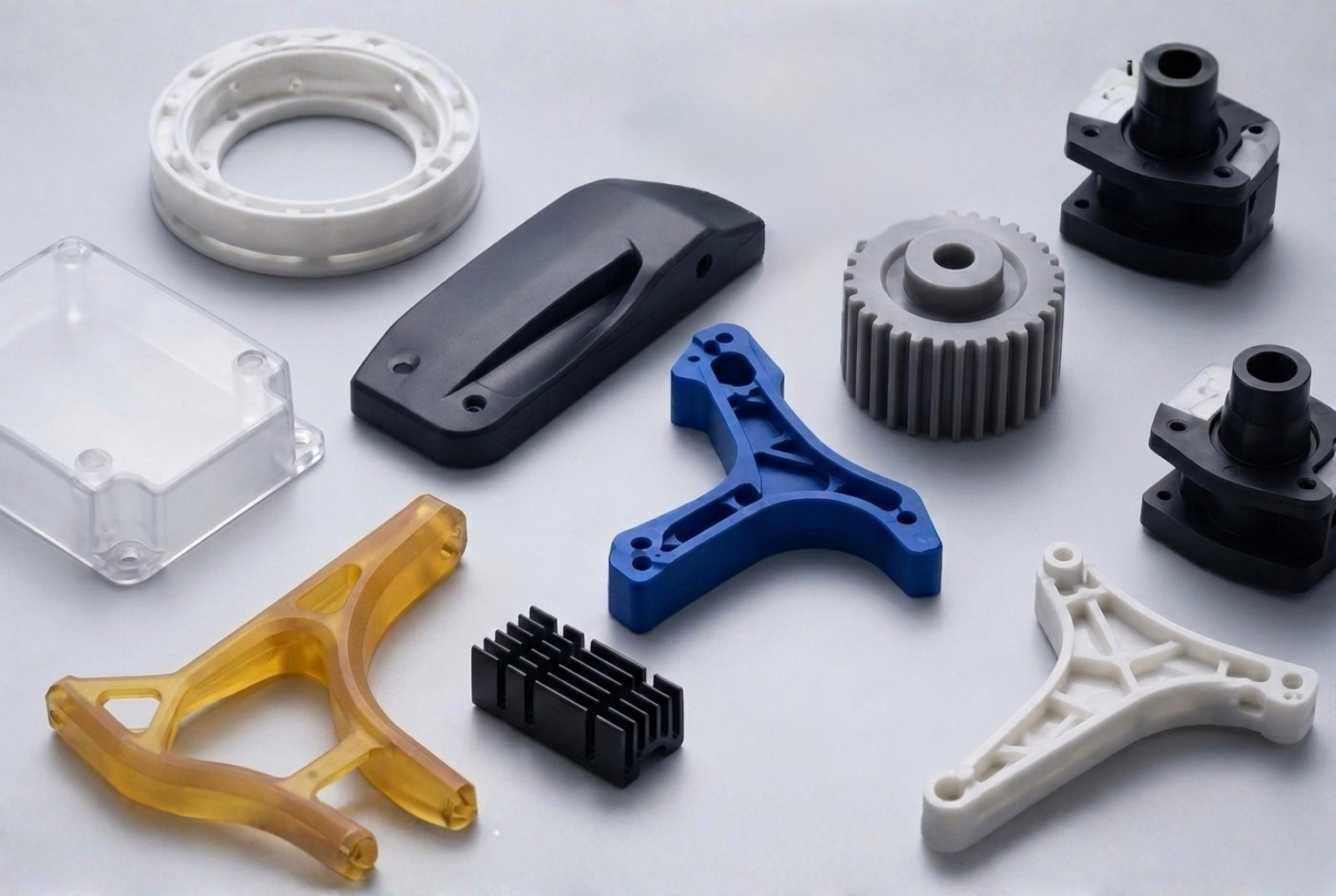
Low volume production helps product teams move from prototypes to market-ready parts without the cost and commitment of full-scale manufacturing. It’s often the most practical path when quality parts are needed in smaller quantities – reducing risk, improving design confidence, and giving teams the flexibility to test, refine, and validate production methods before committing to mass rollout.
Why low volume production matters
Many products are not ready for mass manufacturing, but they are also beyond the prototype stage. That is where low volume production becomes valuable.
It gives teams the ability to produce functional, repeatable parts in smaller batches while still keeping control over cost, quality, and lead time. Marcopolo specifically highlights flexible MOQs and scalable low-volume manufacturing as part of its core model.
| Stage | Typical Need | Why Low Volume Production Helps |
|---|---|---|
| Prototype Stage | Shape, fit, and function validation | Confirms the design before scale-up |
| Pilot Stage | Small batches for testing or launch | Reduces risk before mass commitment |
| Market Entry | Limited demand or controlled release | Supports early sales without high inventory |
| Production Ramp-up | Gradual scale increase | Allows smoother transition to mass manufacturing |
Where it fits in the product journey
Low volume production sits between prototyping and mass manufacturing. It is used when a product needs more than a sample, but does not yet justify high-volume tooling or large inventory.
This is especially useful for product launches, medical validation builds, industrial approvals, and niche applications where demand is real but still developing. Marcopolo’s prototype-to-production positioning is built around this exact gap, using technologies such as soft tooling, machining, RIM, and injection moulding.
Need a faster bridge from prototype to production?
Key benefits of low volume production
Low volume production offers several practical advantages for engineering and product teams.
- Lower upfront tooling investment.
- Faster launch timelines.
- Better control over inventory.
- Easier design refinement before full production.
- Production-intent material for smaller quantities.
- More flexibility for pilot builds and niche markets.
Common use cases
Low volume production is not just for startups. It is widely used by established companies when the full product run is not yet justified.
|
Use case |
Why it needs low volume production |
|---|---|
| Product launch | Demand is still being tested |
| Regulatory samples | Parts must meet submission requirements |
| Customer pilots | Limited quantities are needed for trials |
| Replacement parts | Only small numbers are required |
| Specialized products | Market size is too small for mass tooling |
Technologies used for low volume production
The right process depends on the quantity, part complexity, material, and performance requirements.
|
Process |
Best for |
Strength |
|---|---|---|
| Soft tooling | Small production runs with near-production quality | Lower cost and quicker turnaround |
| Injection moulding | Repeatable production in engineered plastics | Production-intent material |
| Machining | Precision parts in metal or high-performance plastics | High accuracy and flexibility |
| RIM | Low-volume production of large covers and enclosures | Production-equivalent, cost-effective, no hard tooling |
Marcopolo supports all of these paths through its integrated manufacturing setup, including machining, soft tooling, RIM and injection moulding.
Quality expectations
Low volume does not mean low quality. The documentation, inspection standards, and quality systems that govern a low volume batch at Marcopolo are the same ones that govern full production runs.
|
Quality control step |
Purpose |
|---|---|
| First article inspection | Confirms the first part matches the design intent |
| Dimensional verification | Checks critical tolerances |
| Material traceability | Confirms material consistency |
| Process documentation | Supports repeatability |
| Sample reports | Helps with customer approval and audits |
When low volume production is the right choice
Low volume production is the right choice when the design is ready for real-world use but the business is not ready for full-scale manufacturing. It is also ideal when product demand is uncertain, approvals are pending, or the team wants to reduce launch risk.
It allows teams to:
- Protect cash flow.
- Avoid high MOQ pressure.
- Test product demand before scaling.
- Improve design based on real parts.
- Move toward mass manufacturing with less uncertainty.
Get Your Validation Stage Right From the Start
FAQs
What is low volume production?
Low volume production is the manufacture of smaller quantities of parts before full-scale mass production begins.
Why is low volume production important?
It helps teams reduce risk, validate designs, manage cost, and launch faster without committing to large tooling or inventory.
Is low volume production cheaper than mass manufacturing?
Per-part cost is often higher than mass production, but upfront risk and tooling costs are usually much lower.